Thursday, June 25, 2015

Moonwalking

We should all be more comfortable with questions and not so quick to spout our opinions. After all, we know less than we think we do, especially about the biological world. That’s one thing Jack and I share, the joy of questioning. We both like a question that hangs comfortably in the air, causing contemplation, not the rush to an answer.

So it was no surprise that we found more questions than answers when we walked the wilderness area encompassed by the Craters of the Moon National Monument during the height of the preserve’s famous wildflower season. The staff here had told Jack that a sage grouse breeding lek existed on the property. We wanted to see what the habitat looked like.   

Eruptions occurred here over some 13,000 years, the most recent being only 2,000 years ago. It was not from a single volcano erupting in the classic sense, but rather lava that flowed up and out of a deep fissure known as the Great Rift. The area was designated as a national monument in 1924 when explorers pushed to have the lava flows protected. Then in 1970 much of the land was deemed wilderness, a rarity within the National Park System. In 2000 the area was expanded and now encompasses 750,000 acres, some of it privately owned.     

We toured what the Hawaiian’s call a Kipuka, an island of natural vegetation surrounded by lava, thereby eliminating most human effects, including wheeled traffic, grazing, etc. We both wanted to see what this non-grazed area looked like. 

Jack and I sparred over the health of the grass community. I was convinced that the (what I call over-rested) plants would benefit from periodic grazing, as long as they received adequate recovery periods. He wouldn’t go for it, insisting that I was making assumptions based on limited knowledge. “Maybe that plant is just old,” he said.

We walked all the way to Little Prairie which had burned in 1992. The vegetation here was noticeably different, more grass, less brush. Our wet May meant an impressive sea of waving seedheads. But what about plant spacing? Could well managed grazing help fill in the bare ground?

Much of our walking followed the hint of a trail recently traversed by an elk. We noticed here and there her preference for penstemon blooms!   

In our nine mile journey we walked across lots of different degrees of what we might call “healthy” range. Some areas were abundant and diverse, others mostly bare ground. And the one thing that Jack and I agreed on, these differences were NOT caused by cows, or sheep, or any domestic grazing animal. They were caused by soil composition, aspect, etc. And in our culture’s heated debate over the effects of grazing, that’s a mouthful. 

a grouse was here, I even flushed a hen and three chicks!

in the distance, the 2000 fire which left behind a sea of cheat grass

the translucent blue of penstemon
lovely in anyone's eye

with no grazing, there is nothing to remove old growth and rejuvenate the plant
Do you agree?

cheat grass established with no domestic grazers

this area burned in 1992, lovely tall grass from a wet May
Could there be less bare ground with good grazing management?

bed of delicate monkeyflower 

no fire, no grazing by domestic livestock
Is it healthy? And as compared to what?


Friday, June 12, 2015

Making Memories

Spring has turned to summer. Seed heads are showing on the hay ground which means it’s time to break out the harvesting equipment.

This May’s accumulation of rain has been a Godsend for the cattleman. The plant life is unusually prolific. The cottonwood trees that surround our home have showered us in big clumps of cotton for over two weeks, the heaviest I’ve witnessed in my 25 years on the ranch. 

Spring’s last hurrah was one more big move with the cattle, which included hosting guests who had purchased a “rancher for a day” experience at the Leadership Idaho Agriculture Program year-end auction.

It would be a long day. We had to gather the Meadow Creek pasture, go over two bluffs and make the long climb to the Smyler Canyon divide, then down on into Paradise Lane. Mark figured it would take about 6 hours for the actual move – that is if things went right.  

The first time we tried it we had to turn around and come home when the roads got too slimy from heavy rains. It was fine with our guests, Jeff and Debbie Williams, because that meant they could bring their son John back with them in a couple of days when the forecast looked better.  

Our second try turned out to be a spectacular herding day. We had perfect temperatures - in shirt sleeves with a stiff breeze to keep the mosquitoes away. The sky was studded with fluffy clouds. The range was a soppy deep green, the sage wet and fragrant. And all along the way were these lovely little rain ponds for the cattle and dogs to drink from. Sly and Mater took good care of the visitors and Debbie would later call it “an experience of a lifetime.”    

A side benefit was a dutch oven meal waiting for us at our destination prepared by our friends Dick and Lonna Jean Conroy. We don’t often mix pleasure with trailing cows, as there are lots of unknowns - and spoiling the meal by being late was not an option! Luckily the cattle trailed nicely and we made it, a little late but not too late. The meal and company were superb, but as the evening progressed we couldn't help but notice storm clouds building in the west.

You know that heavy, deathly still air that precedes a storm? It happened as we were visiting following dessert. We just looked at each other and then sprang into action, cleaning up dishes and ovens, loading horses, gathering up folding chairs. At one point we took the ends of the rain spattered plastic tablecloth and simply folded it over the remaining goods and piled it in the Conroy’s trailer. When we were all loaded, I gave one last hug to Dick and Lonna Jean as they scrambled into their pickup. My hair looked like Lonna’s, wet dreadlocks, but we were laughing and loving the adventure of it. One for the recordbooks!

picture perfect

Debbie and John on the divide

What a spread!

I think we're in trouble, look at that sky!

Dick and Lonna Jean, "salt of the earth" folks
photo by Debbie Williams

Monday, June 1, 2015

Perfect, perhaps

Mark and I are catching our breath after moving cattle here and there for the last couple of weeks. We’ve had lots of rain and our world is a verdant paradise. After a mild winter and dry March, the moisture came out of nowhere and just keeps coming.

We laid in bed for a few luxurious minutes this morning. It was warm enough to leave the window open all night for the first time this spring and a cacophony of birdsong woke us. Mark called their clamoring, “the excitement of a new day.”

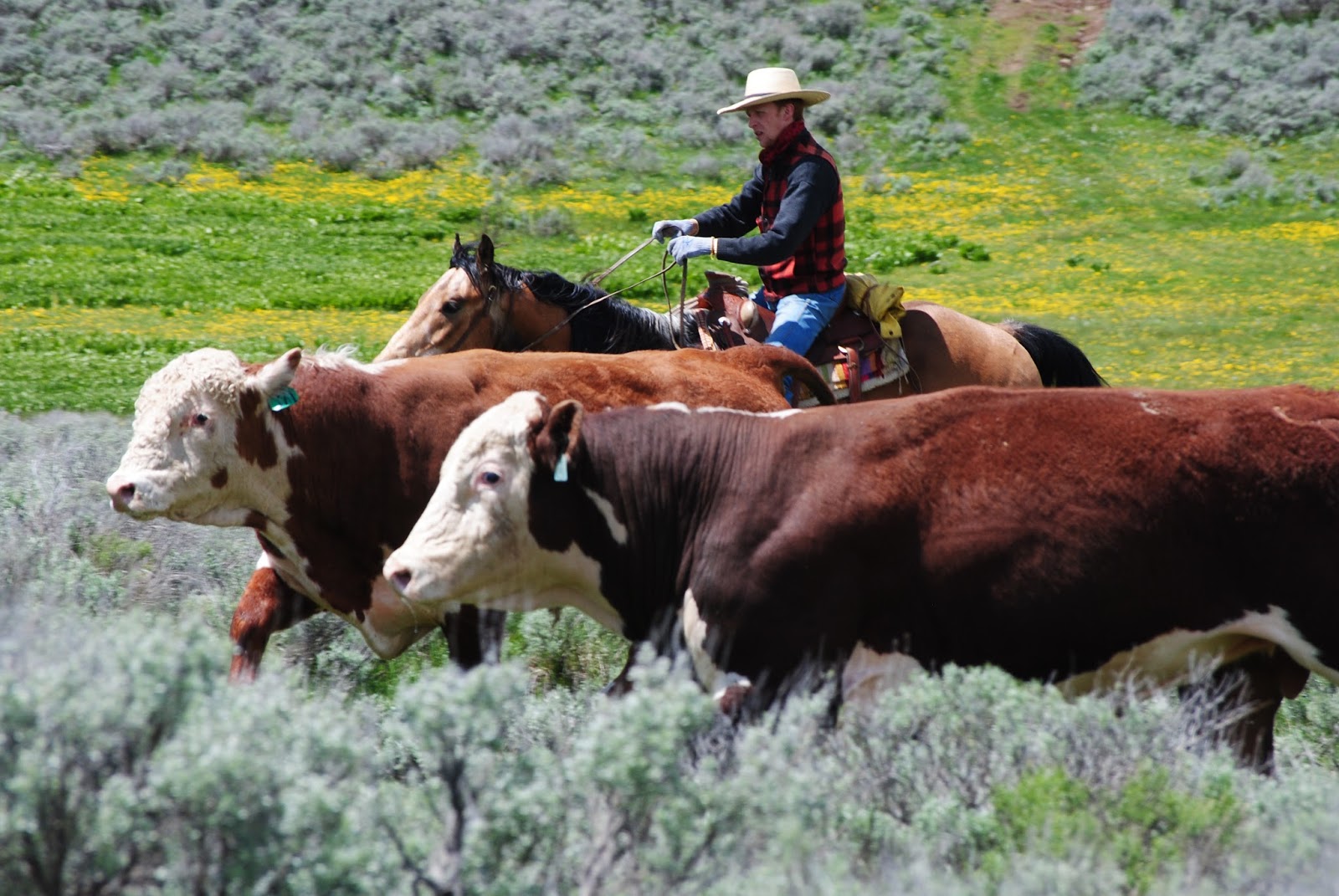
We had one perfect day in the mountains with the kids before they left for the summer. We took up a load of bulls to deliver to the cows and calves (seems we intend to do this all over again next year). Then we had to move the herd across a creek and into an adjoining field.    

I say the day was perfect, but that’s not entirely true. Seth got annoyed with me when I parked my 4-wheeler right directly in the path of the bulls so I could get a photo from the right position. An artist has to get her shot! Then Anna was perturbed when I had a different idea of how to get some straggler calves to cross the creek. Somehow my long experience with cattle herding (while they gallivant around the countryside) carries little weight in my kids’ minds!

Then Seth proceeded to tell me we didn’t do enough to protect the stream banks for fish habitat. “Easy to say when you’re not here to make it happen!”

Annoyed with them, I left to put out salt while they watched the herd settle in. When I returned, still in my not-so-pleasant mindset, I found them in good spirits singing cowboy songs! Another lesson for me. A brief moment of annoyance is just that - a moment - not a habit. Let it go.

And the photos were worth it, don’t you think?


Friday, May 22, 2015

That's a Wrap

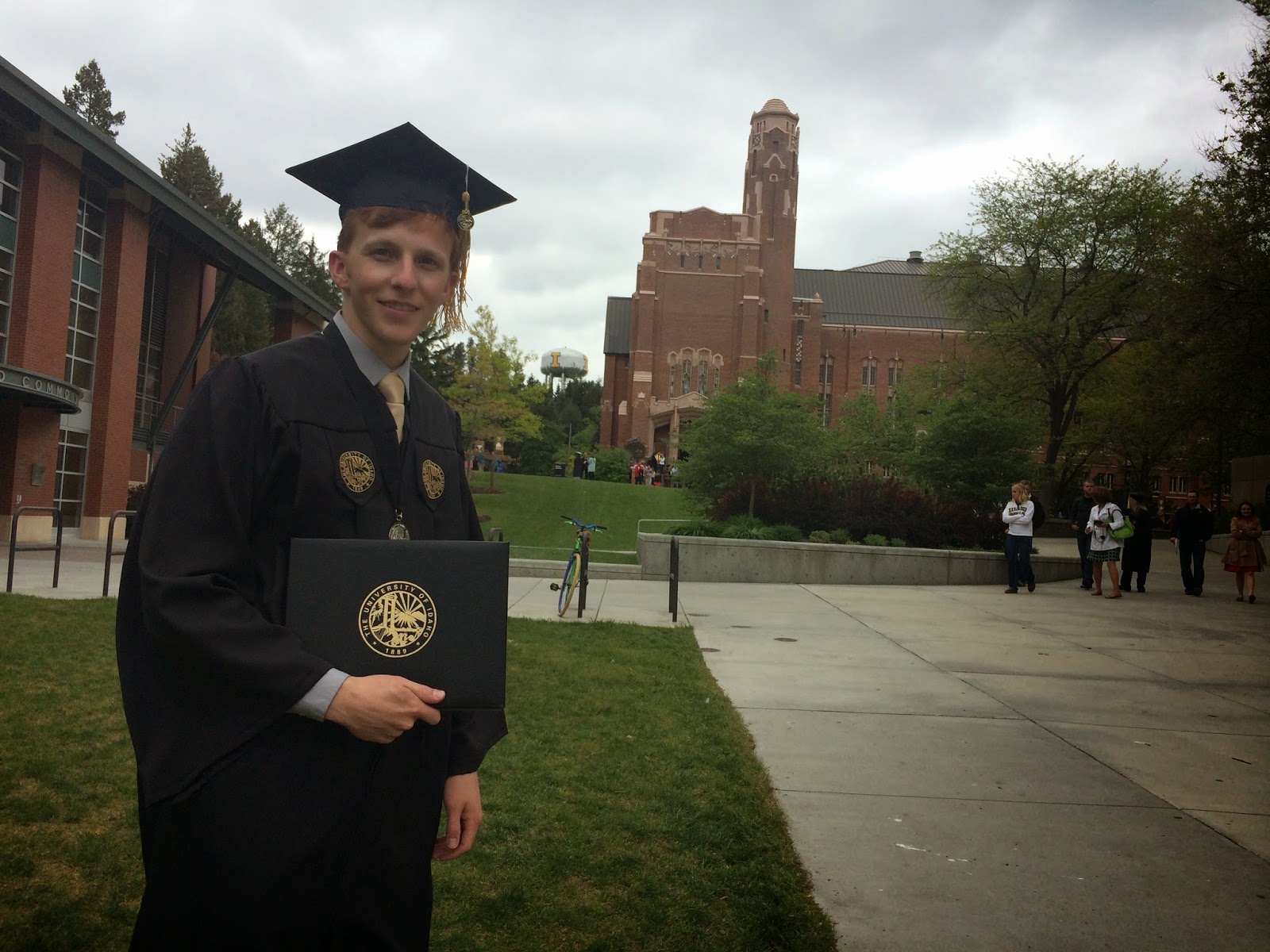
We had a lovely weekend in Moscow to celebrate Seth’s graduation from the University of Idaho. The northern panhandle of our state is breathtakingly beautiful. The rolling farm ground of peas, lentils, grain and alfalfa is bathed in shades of green this time of year. And interspersed here and there are standing pines and meticulously kept farmsteads. The “breaks” of the Clearwater River provide the backdrop.  

We stayed in a luscious bed and breakfast I found on Airbnb just outside of neighboring Genesee. Airbnb is a great travel tool if you're into a bit of adventuring. Our host, Gayle, is a farm blogger/advocate like me so we had lots to visit about.

Seth had a hard time leaving his university life behind. He squeezed every drop out of his college experience. From fishing the St. Joe and recruiting a bunch of great guys to his fraternity, to working for the College of Agriculture and supervising a team of interns  his senior year, he did it all. He even got to wear the homecoming king crown and emcee a few university events. He made the most of adult mentors and did some mentoring himself to underclassmen, and he got a great education along the way. He’s the type of kid that the opportunities a university provides are used to their best advantage and worth every penny.  

After we loaded his four year accumulation of stuff into Anita’s truck and Seth’s 23-yr-old Toyota pickup, I rode with him out of town. He was in a pensive mood, not unlike other transition days in his life. I well remember the day he left home 4 years ago in that same Toyota to head to Moscow. After stalling most of the morning and still facing a 9-hr drive, I finally had to guide him behind the wheel and out the driveway, assuring him we’d still be here to come home to. He has never liked change. But even so, he immerses himself in the moment, saying his farewells and taking a long last look back.

We came home to rain and more rain and the annual switching of gears that our kids go through. They’re busy riding horses and working dogs and trying to keep dry as we follow another herd to the hills. They’re both steeling themselves for their next move, Anna to D.C. to work for the summer for the National FFA Organization and Seth to South Carolina to start a new job with an ag consulting firm. They use the word “dread” to describe the feeling of leaving home and the West again.

And as for me, the mom, I’m trying to concentrate on words like gratitude, equanimity and faith. Gratitude for all the blessings I enjoy every day - health, wealth, a warm bed, a solid companion. Equanimity, which is my catch-all word and works in all situations. And faith, that the kids will have safe and rewarding adventures and that they’ll find their way back home again.


looking over the university feedlot pen of cattle

last campus walk

blessed rain

Cassie doesn't mind the wet while Seth takes refuge


Saturday, May 9, 2015

A May Album

After trying and failing to write a blog, I decided to let the images tell the story for me.  

I've been on a spring cleaning mission. This old barbed wire was gathered off the mountain last fall to make way for a new line. Oh, if these rolls could talk! 


A76 made the cut and is now a member of the herd. Each replacement heifer is weighed and vaccinated and her number is tattooed into her ear in case she loses her tag. 


We left home with the first herd and encountered a plethora of obstacles along the way.


The crew that makes it happen.


I walked to change a stream of water this morning and flushed a pheasant off her nest! 


Pulling up fence in God's country to get ready for the cows. A second crew kept the herd going.


We made it to the first pasture. The greenest of greens. Bless the rain!


Saturday, May 2, 2015

Sharing Our Story

Spring piles on top of itself on a ranch. There are so many jobs to choose from one can get dizzy.

In the midst of it all I made a quick trip to Boise to speak to a group of biology graduate students. The class is called Science and Society and features a different speaker each week. As the semester went along I was privy to the list of presenters and noticed that they all had initials behind their name! I puzzled about what exactly I could share with the students and decided to simply tell the story of a ranch. Maybe if I told our story, I thought, the class might have a better understanding of landowners in general.  

The students are budding scientists involved in research projects of one kind or another, and so I started my talk with a bit about another scientist, Andre Voisin, a French biochemist who wrote the classic Grass Productivity in 1959. It was said of Voisin, “he realized more than most that the unknowns in science are far greater than the knowns and that simple observation of the cow at grass could teach us more about ecological relationships than the most sophisticated research yet developed.”

This idea of the cow at grass being research hits a chord with me. Mark and I have been “researching” for over twenty years, and unlike these students who are able to get rid of annoying variables and search out a clear cause and effect relationship, we do our research with the variables intact. We make stabs at cause and effect. We try to be comfortable with always more questions than answers. We keep in mind that success is measured by the health of the three legs of managing wholes - people, land and money. If one leg falters the other two follow. Real life in other words.   

I showed slides of a year on the ranch, our search for feed and water every day, the relationship between the cow and her calf, herd health and low stress stockmanship and how we strive to do our best within the many constraints we find ourselves. I told them about working with government agencies and some good and not-so-good case studies for them to ponder.

I think the students got it. What fun to hear their questions and learn a little bit about their own stories. I told them to keep their stories close because our stories keep us honest and are our best contribution to the world around us.  

I closed with a quote from Charles Dana, a journalist who lived in the 1800’s. I doubt very much he was talking about natural resource concerns, but it seems fitting. “Fight for your opinions, but do not believe that they contain the whole truth or the only truth.”

I have a vision of good ecosystem management. It is of a scientist and a rancher/farmer with heads bent together over the land in full appreciation of the knowledge they both contribute. Thanks Jen for fostering that same vision!   

one ranch story
    

Tuesday, April 14, 2015

FFA 'ing

I spent three days at the FFA State Leadership Conference. When I got home the willows had flowered, that wispy light green smudge that appears across the dark branches and is always the first leafing of spring. It was a lovely greeting. But what I never realized before were the bees! As I walked home from feeding cows today a loud hum came from the trees. In researching, I found out that willows are important as a first food source for bees in early spring. Who knew our humble willow-lined canal had such an important job?

The kids put on another great conference. I helped select the new officer team as part of the nominating committee, or Nom-Com, as they call it. Students representing each of the nine FFA districts in Idaho serve on Nom-Com along with three adults. We put 24 candidates through a grueling interview process that I hope they appreciate later on as a character building event. Only six kids make it on the team. Now that it's history, I'd like to look each candidate in the eye and tell them how heroic they were, winners or not.  

Seth and Anna help run the conference each year since they've outgrown FFA membership. Seth hustles around with a mic in his ear and Anna, with script in hand, patiently guides the officers as they escort students, parents, civic members, teachers, etc. through the curtains and into the spotlight. When Nom-Com finished our work on the last day of conference, I stood in the darkness backstage and watched my kids do their thing. They were too focused to talk to me but I did get a heartfelt hug from each of them. I think I'm even more proud of them working behind the scenes than I was when they themselves were the stars of the event.

And in the final moments of the conference, as the officers were announced and they ran on stage, many in tears, I said a prayer for the kids who didn’t make it – to keep believing in themselves and to continue to grow and forgive. And to the ones who were selected, those who will wear the officer jacket this coming year, a prayer too, for discipline, humility, insight and integrity. Do us proud! 

bee heaven
credit Laura Wilder for the photo:
7 years of state presidents helping out with conference
- finally another girl!