Thursday, October 28, 2021

And the Rains Came

We’ve had rain and more rain. And with the mild temperatures, it’s meant one of the most beautiful falls we can remember. Most years it freezes hard and the leaves turn to a dull brown before they color. But this year even the willows are studded with yellow. My sumac off the back deck is a scrumptious mix of reds and pinks. When I’m driving to do errands, I take different routes just to see what trees and bushes are aflame with color. Be still my heart.

It’s heaven for cows too. There’s green under the golden grasses. And the soil is moist with no hint of dust, which can be a health risk in the fall.

The newly weaned calves have created their own community now, depending on one another (and the rancher) instead of Mom to find feed and water. The mother cows are still high in the mountains, content to play out these last carefree days of summer-time grazing. 

Mark and I spent a few days in the hills checking fences and cows. We took the 4-wheeler up the creek to shut off the small irrigation ditch that circles the meadow. It seeps through the soil to water the grass from underground. Getting water into the soil profile, however, is done most efficiently by the beavers that live here. As Mark headed to the top of the pasture, he dropped me off to walk the steep side of the creek to look for their dams. 

We’ve been concerned. Low water levels this spring made us think the dams had washed out and perhaps we had lost our beaver population. But as I walked along the creek, I ran into old dams still doing a nice job of backing up the water. Then I came upon several dams with evidence of new activity. New limbs on top of old. High tight structures with deep ponds on the other side. Here was a freshly felled quakie. And nearby, a trail the beaver had worn leading to the edge of the pond.  

The creek is heavy with willows, so walking along it is impossible. But if you stop and listen, the dam locations are revealed by the trickle of water. Then you can weave your way through the thicket to find them. Someday I want to come back and just sit and wait. Long enough to actually see the beavers at work. It could happen.

Besides the hands-on work of the ranch, Mark and I go out in the world to try and make a difference. We participate in a variety of groups to forward the values we believe in. Mark will take over as Idaho Cattle Association president next month. I venture into conservation work and write about it mostly. We discuss with other partners. We argue. We collaborate, teach, listen and learn. Then we come back home to practice the principles on our own ranch. It’s not easy. We’ll do this until we die, always imperfect.

And in the morning, while it’s still dark out, with that first cup of coffee poured, we tell each other about our escapades and try to make sense of it all. We’re not that young couple anymore with enough time ahead of us to imagine all our dreams coming true. We’re pragmatists now. We celebrate small wins. We understand that getting the question right is more important than thinking we have all the answers. We try to focus on issues we can actually influence. 

There's plenty to worry about if you're in the natural resource business. Or the beef business. Or a citizen alive today for that matter. But worrying doesn't help does it? What helps is taking some kind of action. I have a quote written by Sam Bingham, a practitioner and teacher of Holistic Management. “Fatalism is a luxury of those who have time to chat. Those who must act must have hope.” 


at home, sweet light of evening


stockpiled grass for winter grazing
there's a maze of cobwebs across the tips of the grass


nice work!


Great Grandpa Eldro's corrals


Saturday, October 9, 2021

Oktoberfest

Today was a good day. Mark and I moved the freshly weaned heifer calves to a new pasture. My dog Dot got stepped on two days ago and is carrying a back leg so I didn’t have her help. It’s good to have to herd cattle alone once in a while so you know how much you appreciate your dog. The calves looked bright and healthy. They handled smooth like a herd of sheep. They flowed as one through the last gate and across the canal bridge to their new pasture and buried their faces in the sward. Except for the gnats making Jane shake her head continually, it was perfect.

Mark is feeling good (me too) to have the calves weaned and vaccinated and the mother cows checked for pregnancy. We weaned three weeks early in response to dry conditions. Without their calves, the cows will require less feed and water, and will climb to the higher reaches of their mountain pasture.

We woke to rain in the night. Love the rain – hate that it will bring the bright autumn leaves off the trees. We were unsaddling the horses and I looked around at the trees and thought, “Wendy, come out here tomorrow and just sit. Don’t let this moment of beauty get by because you’ve only got a moment.” How right I was.

Sweet Leah asked me to get pumpkins with her and Emma. Oh, how Emma wanted to get down and run around! But she can't walk yet, so she just pumped her legs and squealed as we carried her around the orange orbs lounging around in a crumpled array. God did good when he made a pumpkin patch. You can drive by a patch without noticing it all summer and then all of a sudden it freezes and there they are!

Mark has been beating it back and forth to the mountains every day, as has the rest of the ranching and recreating community apparently, because the washboards on the gravel road are terrible.

The days are getting short. It’s surprising to find it getting dark at 7:30!? We finished up pregging the cows by 4:00 and then had to get the cows moved and back on water. It was black dark and a long bouncy ride home still to go.

The watermaster shut the canal down that flows in front of our house to save storage for spring. We were still irrigating to hold water in the soil over the winter, but this will have to do. The crystal clear water is flowing, but ever so slowly, and will soon sink and be gone. Now we hold our breath and wait.

Mark talked to a cattle buyer this morning who told him that across the state ranchers are sending cows to market because of a lack of feed and/or prohibitive wintering costs. We drove by the friday sale at the local auction yards and the line of stock trailers waiting their turn at the scales stretched back on itself.

We got a weight on every calf and every cow this fall. Drought decisions are imminent. Mark is evaluating each cow in the herd and deciding who stays and who goes.

There's a saying he repeats in times of stress, “never holler woah in a tight spot.” It means to stay steady, keep pressing on even though you'd like to freeze up. I always think of a horse that’s stepped in a bog. Don’t pull her up - oh no - lean in and encourage her on. Be smart, be calm, don't panic. 


They came to check out Emma

a happy grandma took this


an easy move


winding down


Thursday, September 23, 2021

Road Warriors

I’m lucky to have grandmothers on both sides that researched and wrote about my ancestors. Mom went even further and wrote a western history Along the Rivers which recounts, as she put it, “three stories, the Pioneering Story, the Mormon Story, and the Indian Story.” And as she told these stories, interwoven are my ancestors’ adventures as they interacted with those larger movements.

So with her book as a reference guide, my four sisters and I traversed across six states to find our roots and make memories in mid-September.

We went East on the same route our families came West. We started at Bear River where it makes a hairpin curve south. At this point the emigrant trail splits, with those heading to California going south and those headed to Oregon going north. 

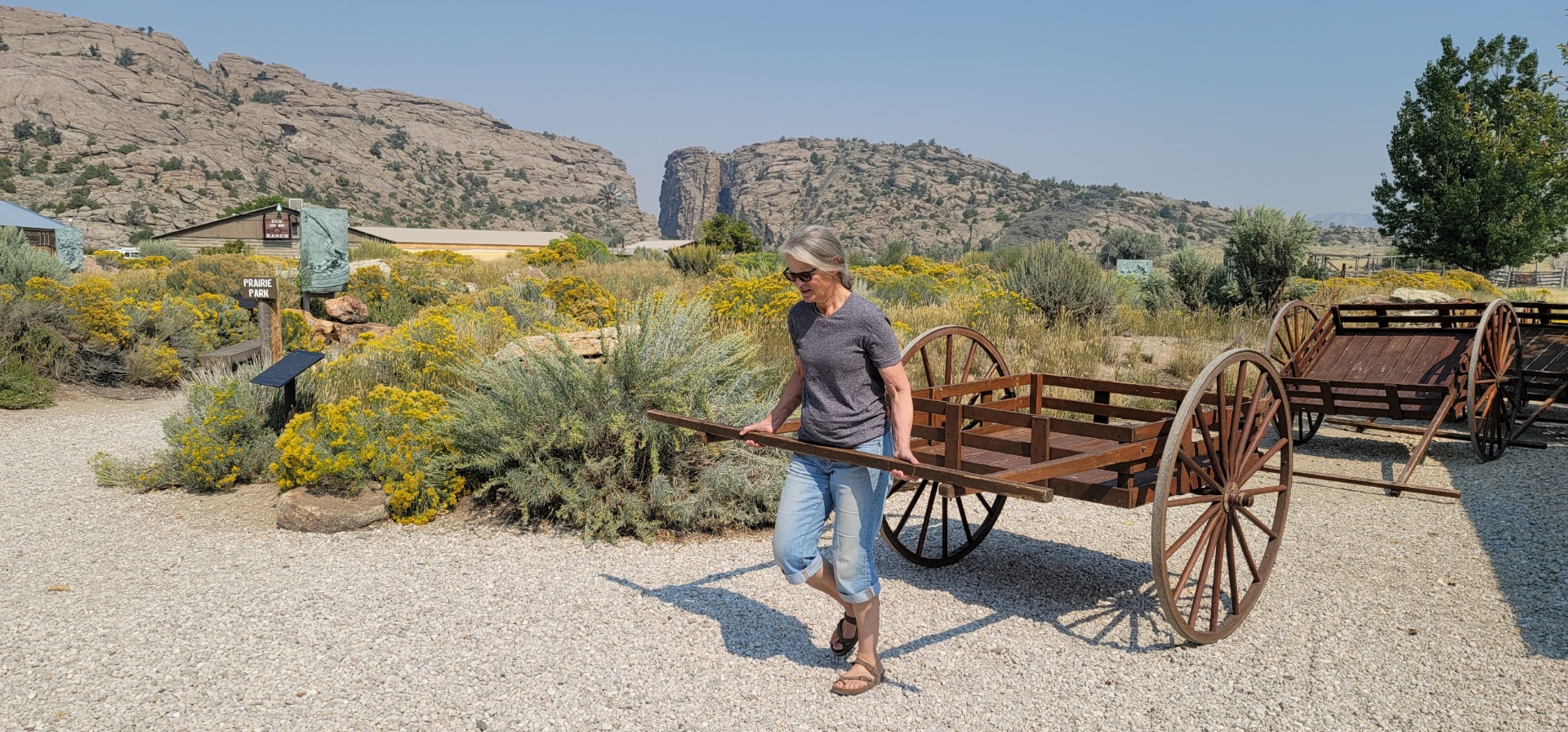
We continued on into Wyoming and followed the Sweetwater, then the North Platte that guided travelers westward. We learned about the handcart pioneers, of which our great grandfather was one, and the tragedy that befell those who got caught in an October blizzard in Martin’s Cove, now a welcoming visitor’s site southwest of Casper.

We saw wagon ruts, actually a deep trench through sandstone, near the town of Guernsey, Wyoming. Register Cliff is nearby too, where emigrants carved their names and often the year of their travel. We even found the name “Just” which may have been placed there by our very own great grandfather. The date was 185- (the last digit illegible). Our Just family traveled in 1857. Could it be? My sister proclaimed on the spot, “We’re owning it!”

We stopped at Fort Laramie, a large restored complex of barracks, officer quarters, etc. of a fur trading post turned military fort in the 1800’s. We watched a live demonstration of heavy artillery put on by park employees in period soldier dress. They did the cannon shuffle for us, the five person dance of loading and firing each round. We also learned that these large arms were mostly for scaring the Indians, their most frequent use being the raising and lowering of the flag each day.

We drove through miles and miles of corn and soybeans that defined our route in rural eastern Nebraska, Iowa, Illinois and Missouri. With neatly mown and manicured roadways and farmsteads it was stunningly beautiful. And it's green because it rains so much there in the summer. But the conservationist in me wonders why they can’t leave some plants to mature for the birds and bees and butterflies. 

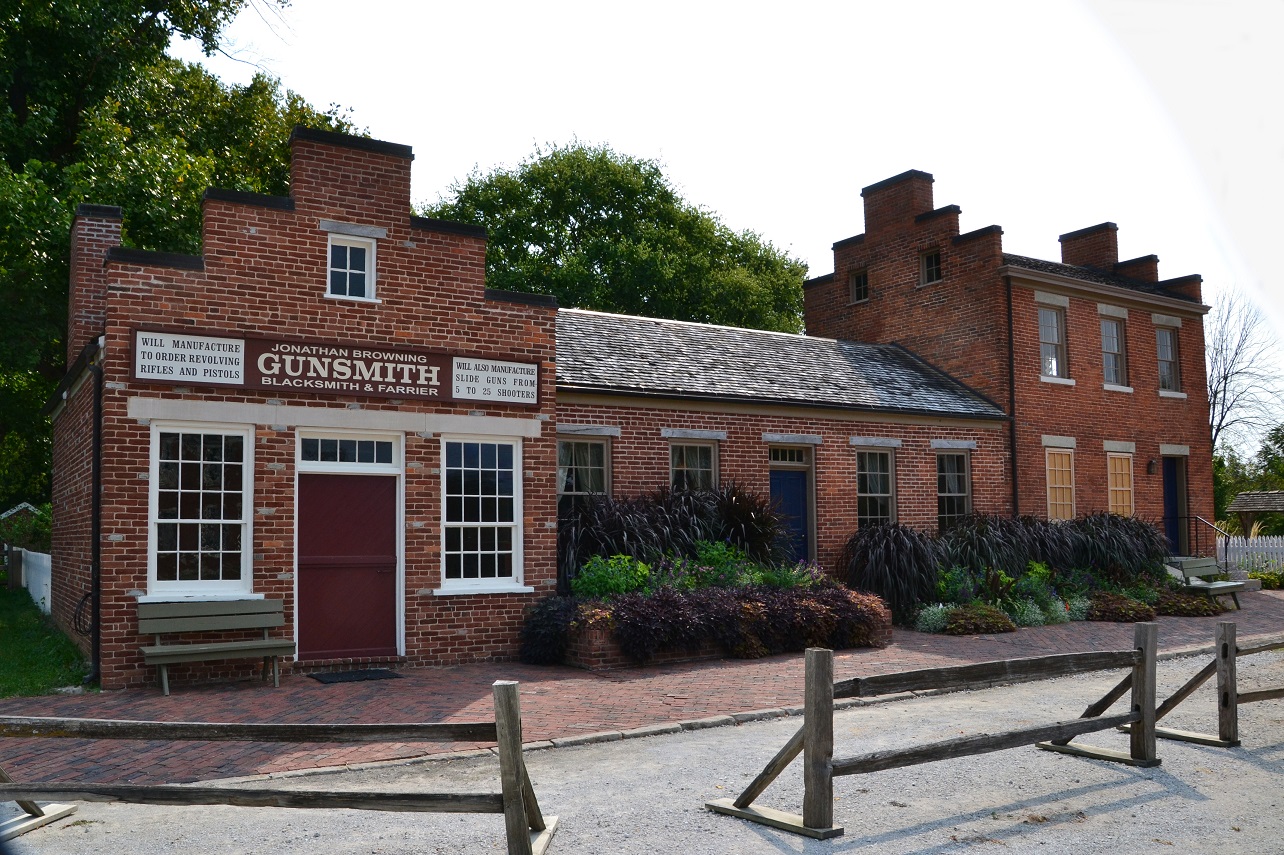
We toured the old townsite of Nauvoo, Illinois, where our Mormon ancestors, the Webbs and Carlings who were Blacksmiths, and the Brownings who made guns, were important to the Mormon emigration to escape persecution. I'm not a Mormon, but the site is a joy to visit. And don't miss the performing missionaries if you go. They sing and dance like professionals.  

Human history aside, one of my favorite stops was to venture into a stand of restored tall grass prairie full of buzzing wildlife. 

All of us being ranch raised, we especially enjoyed the oxen ride at Nauvoo. Any breed of cattle, mostly male and castrated, is called an ox if it’s used to do work. They need to have horns so the yoke will stay put. For wagon trains, oxen were preferable to horses because they were gentler, stronger, could eat a wider array of forages, would not be stolen by the Indians, and were cheaper to purchase, They also required only a yoke, no harness and reins like horses. The “bull whacker” would walk beside the yoke of oxen (one pair) or two or three, calling “gee” and “haw” (directional demands) to keep them moving ahead. The families walked alongside as the wagon would be carrying their supplies.

We kept going east to Springfield, Illinois, to visit the Lincoln Museum and Library. It was good fun plus educational. The lifelike figures of Lincoln and his contemporaries bring the past absolutely alive. The exhibits profile a complex leader and a time of great divisiveness in our nation. It gives a useful perspective on our current quagmire. As a country we got past it then and will do so now.

Five women (someone said “elderly," I said “middle-aged") taking off alone for 4,000 miles? Crazy? We thought perhaps so when our left wheel sped past us while we were traveling on a country road near Torrington, Wyoming. We pulled off safely and the tire landed in a canal which was only mud not water. Through the kindness of a cowboy and a farmer/cop, we were back on the road the next morning.

Yes, we went to learn about our ancestors, but we mostly learned about us as sisters. We got along well as usual. Ok, so there’s a few subjects we avoid, but we thoroughly enjoyed the hours of drive time, the conversations over the less than luscious continental breakfasts offered by our lodging hosts, the comradery shared as we built sandwiches on various picnic tables across this beautiful country, and imagining our Mom's excitement as we cemented our relationships with each other and with the brave souls that preceded us. We made friends with strangers, found out google maps were amazingly helpful and flawed at the same time. And we couldn’t help but marvel at how in 170 or so years we’ve gone from weeks of near starvation and camping in the elements to queen beds in crisp sheets,  hot showers and an array of dining choices at our every beck and call.

Oh how lucky we are. To live where we do. To have the parents we did. To be so similar, yet so different. And to be the very best of friends.


reading from Mom's book at Chimney Rock, an important landmark along the Emigrant Trail


restored gun shop owned by our Browning ancestor
Nauvoo, Illinois


discussing strategy with McClellan and Grant
Lincoln Museum, Springfield, Illinois


how great grandfather Nels's family did it
Martin's Cove, Wyoming


Love the native prairie grass and forbs
Nauvoo, Illinois


my valiant sisters
me, Donna, Becky, Kittie, Merle


 wagon ruts at Guernsey, WY


Monday, September 6, 2021

Babies, etc.

Late August graced us with rain and cooler temperatures, and lifted our spirits. The grass is green again and we can imagine the cow herd will make it through ok. Fall is sneaking in. We were surprised to see frost on the grass two days ago. Luckily it only scared the cucumbers, a reprieve for now.

There’s a richness to late summer when all the plants are ripening, seeds are filling, and the haze of late summer fills the sky with smoke from faraway fires and dust from grain threshing. The garden is bearing full-on of course. Colorful beets and carrots, cucumbers galore, buttery cabbage and giant zinnias in hot pink and orange. I planted purple potatoes this spring and they’re such fun to pull out of the soil!

We got our second grandchild about a month ago. I spent a few luxurious days with her and her mom relishing the magical space a newborn occupies. It’s true that when you accompany death or birth one glimpses the transcendent. Something otherworldly manifests itself and we are awestruck.

Her name is Freya Rain. Freya is a Norse name for the goddess of beauty and fertility. Such a lofty title for such a tiny girl.

There’s a bit of a pause right now on the ranch. The streams Mark has been tending all summer are waning. The cattle are still in the mountains. The hay is in the stackyard. We’ve been harvesting grass-fed beef animals and there’s only a few left on the ranch.

I had Emma, the other granddaughter, one day and was not being successful trying to make her happy. She’s five months old and doesn’t think Grandma measures up to Mom at all. Mark came inside for a minute and took her from me and sat with her out on the deck. Outdoors always helps with Emma. She fussed for a bit, but was soon examining his rough hands and trying to maneuver his fingers into her mouth. I watched them for a while through the glass door. He whispered to me that she was happy as long as he didn’t talk to her and kept her facing forward. His calm fed her calm.

Oh, if this time of year could just stretch out - way out - like a lazy cat in the sunshine. And let us catch our breath from a hectic summer and allow us to soak up these bittersweet, pungent days of September. 


Monday, August 2, 2021

Irrigating with Emma

It’s been a brutally hot summer. Starting in early June the forecast stubbornly reported a string of mid 90’s stretching into the distance. Then it was super dry on top of that. Mark and I cuss and discuss how much grass we need to get through until winter and what hay prices might be. The drought covers the whole of the western U.S. so we have lots of company, which means more competition for feedstuffs across the industry.

The nights are sweet relief from the heat, but, oh, what a prime time for worrying! Mark and I just smile at each other over coffee in the morning, knowing what we've shared over night, and get ready to face it together another day.  

A welcome bright spot this summer has been the frequent company of our first grandchild. She lives just down the road. I had her for a couple of hours (as long as she’ll last without mom) and took her with me to change water for the first time. All I had to do was put a tin in a headgate, wouldn’t even need a shovel, so knew I could carry her. Plus it was overcast and cool for a change. At only 4 months old, she was content to bob along in my arms through the vegetation. Well, she cried when I laid her in the grass to open a wire gate, but quickly got over that.

Next summer she'll be walking along with me. I’ll still have to carry her where the grass gets deep. We’ll watch for blossoms and bees and listen for the whistling flutter of mourning doves as they flush ahead of our approach. We might see an owl glide quietly out of the olives.

We’ll hunt for monarch butterflies and yellow and black caterpillars in the milkweed patches. She may know what to look for only because she’s seen a picture of one in a book. That makes me sad. 

Soon she’ll be learning the names of plants and be able to tell the difference between yellow bee plant and mustard, between rabbitbrush and sagebrush. Later still we’ll learn how to identify bunch grasses by their seedheads in July and why perennial grasses are preferable to annual grasses. I joked with her Mom and Dad that I would be sounding out poll-in-a-tor to her before long. 

My hope is that she grows up loving the wildness of it all. That she is comfortable wading ditches and pulling weeds and petting a horse. That wherever she goes in life, she watches for the moon waxing to full, and appreciates the richness of the natural world around her.

But that’s a long time from now. For today I must remember to tell Mark we left that gate open. 


our first selfie


Friday, July 9, 2021

Pratt Ranch Hall of Fame

We had a major herd move on the only two mild days this summer. We were dreading moving cattle in 90 degree temperatures, but the weather took mercy on us and it stayed in the low 80’s with a nice breeze.

We did it without Martha, Anita’s border collie that has been a mainstay on the ranch for many years. She failed this spring quite suddenly and goodbyes were in order.

Martha stood out from the other herding dogs on the ranch. They’re mostly red or black with white markings and full coats. Martha had a mottled black and white coat, smooth, with prick ears, rare qualities in her breed.

She was always kind to people and animals and really wanted to be a partner to anyone who knew what they were doing with the herd. If they were just hollering, Martha would ignore them and wasn’t above working on her own! Anita told me that when Gary took Martha they were “a match made in heaven.” As Anita said, “Martha thought she knew best, and Gary thought Martha knew best too, so it worked great!”

I remember one brisk morning when we were gathering the Brush Creek field. We had a long way to go to start the cattle home for the winter. Gary had Martha with him, well mostly anyway. Dot and I were up the creek on a steep sidehill trying to reach a few cattle on the ridgeline. Here came Martha through the sagebrush!? She helped Dot, got the stock headed down, and then hurried back to Gary.

Anita described Martha as “having scope,” meaning she would naturally look around to see livestock that were way out and go fetch them. If the herd was all together she made sure they stayed that way, tucking them in nice and tidy with her constant back and forth motion.

The sheep that live in the corral out the front door of Gary and Anita’s house were Martha’s own personal property. They had an agreement – the sheep relaxed and didn’t pay attention to Martha if she was just patrolling the yard or lying at the corral. But when she got serious, they did her bidding. Martha was still tending her charges when she fell ill.

She had 4 or 5 litters and her progeny are working dogs like her. Martha would never quit if she thought you needed her. Anna’s Stella, Martha’s granddaughter, is the same way.

I’ve thought of a Pratt Ranch Hall of Fame and who might occupy the ledger. Certainly Sly, the sorrel quarter horse who tended little kids and dudes from the city, then could turn a cow (hard) for Mark, would make the cut. My Beauty dog would be there of course, the one that taught me the joy of a working dog companion. Rocker and Mac, equines, and Jack and Susie, canines, would be remembered. And so would Martha. These exceptional animals weren’t just helpers, but played integral roles in getting the work done that is required of ranching. They had not only intuition and drive, but something more that I struggle to describe. Something about partnership that is reserved for your most loyal of friends and family. They made our work enjoyable, nay, doable.

They leave big holes when they go. In the daily workload for sure, and in our hearts and souls at days end.   


all photos by Anita

Monday, May 10, 2021

Mom's Day

God shook out his great green cloth and spread it across the pastures. It’s the big switch over. We’re still feeding cows for a few more days. When they finish with their hay, they resume wandering around the pasture clipping it to a golf course finish. Thankfully they’ll be leaving for the mountains soon so the grass can take a nice long breath.

Spring, as usual, came on with a great lunge. All of a sudden it’s time to get the ditches ready to start irrigating. We had a little excitement yesterday when we were burning the dead grass from a ditch in a deep ravine. Good thing there were 4 of us. Anna had a handheld sprayer, Alan a shovel; Mark and I had pitchforks. We instituted a back burn, shoveled and sprayed and tamped and finally got the fire out before it got away. Then we turned on the water which meant more frenzied pitching as the stream moved along gathering debris. Trash can clog the pipes the water travels through and create trouble if you get behind. It’s exciting, but at the end when you get to see and smell (!) water on dry ground it’s a treat.

If we didn’t have enough to do every day, add moving the stream twice a day to the list. As Mark will tell you, “It’s non-stop fun.”

Mark was down with a back issue until just a few days ago. For ten days he laid on the floor, rising just long enough to have me ferry him to the chiropractor. It was a wake-up call for us. We know we depend too much on his physical labor, but this was up close and personal – and scary. We remembered a story told to us by a Canadian couple that came to work for us one summer. They thought the Pratt men worked too hard without a break. They told us about a neighbor back home in Alberta that had the same work habit, wouldn’t slow down like he needed to, and finally ”put his foot in an auger,” and forced the issue. Okay, lesson noted.

Our friends Dave and Alan, about my age and professionals in their own careers, help us often. I don't know what we'd do without them and don't want to find out! The kids have stepped up too, working every weekend to get the calves branded and the sick ones tended. We got the yearlings sorted and two loads weighed and shipped. And with water running across the land while we sleep, it’s starting to line out. We’ll be “shaping up” the herd and staging for the mountains this week.

On our last branding day, Mark and I left the crew to tend the last stretch of Sand Creek water. It winds through tall trees that are just leafing out. It was a lovely cool morning. We worked independently with his‘n hers pitchforks and finished up in time to share Anita’s lunch on Seth and Leah’s lawn in the sunshine. I got to hold the new granddaughter. It was a perfect Mother’s Day for this grandma. 


the end of Sand Creek


crisis passed